Showing posts with label 1970s. Show all posts

Sunday, August 6, 2017

Scenes From a Marriage

I could write this with circumspection and objectivity, but that ain’t gonna happen.

First off, I’ll get the rant out of the way, but promise to go back and look at the characters with compassion once I’ve gotten it out of my system.

I don’t understand. From the pages of notes that I’m jotting down while watching, these are the words that appear the most.

I don’t understand Marianne’s attraction to Johan. 

There, I said it. I am truly put off by his coldness and arrogance (All a front? Don’t worry; I’ll get back to this). Physically, Marianne reacts negatively to it as well. During the opening scene, while being interviewed, her body language speaks loud and clear. She is so uncomfortable with his boasting; tugging at her collar, elbowing him slightly, glancing sideways. I’m squirming along with her for that is such an awful place to be; trapped to bad behavior by association. Continuing on with the physical, Johan says later that he hated her as he felt her indifference when having sex and is confused why his “bad behavior or criticism made [her] withdraw.” 

And I say, No duh. 

Heaven forbid he put any effort at being consistently kind into his relationship. Marianne has so much natural affection for him, that the formula is so simple—he treats her with care and she’s his. But he can’t be bothered--such a selfish, myopic view that doesn’t serve him well. Even his kisses are awful; self pleasure instead of giving, but she likes them. Go figure.

Okay, on to Marianne. Even though her body instinctively reacts to his behavior, she doesn’t allow her mind to do so. Projecting on to him what she wishes he would be, she lives the illusion. Can she not see that as she prattles away, he’s not there? He left long ago in realization that she wasn’t going to really see him. What would be the point of sharing his poetry? Subterfuge is the kiss of death. I know that Marianne’s story is one of ascending, but it’s so torturous watching her react to her husband’s infidelity—all nurturing (Make him breakfast? Really?) and begging (Anything but that!) and then displacing her anger towards her friends who are privy to the situation. (I couldn’t take it anymore and had to go for a walk.) There is one aspect of Marianne that’s dizzying. Sometimes her emotions turn on a dime and I have to go back and try and figure out what exactly Johan said or watch her face as she goes through a thought process to find the trigger. As a woman I understand triggers, but hers are so abrupt that all I can think is, “Poor Johan, he doesn’t stand a chance at figuring all this out.”

Now for a little compassion, which I do see is peaking out in the two previous paragraphs. Johan is acutely alone. His wife and girlfriend don’t completely know him, but it’s not surprising since he doesn’t have a grasp on who he is either—which belie his bombastic remarks at the beginning. And, oh how I’m loving Marianne’s self discovery. Words like “whether the potential for joy that was innate in me is dead, or whether it merely lies dormant and can be awakened” resonates. Zing!

Everything up to this point was written before seeing the last scene. The shifting moral sands are onerous for me to traverse, but there is some real communication happening between the characters that on one hand is pitiful and on the other beautifully genuine, since they have each arrived at some place new. My next step is to look for reviews to help me see it from other perspectives, for mine is not enough.

Oh yeah, but what about it being a movie? I forgot about the camera; every episode I clean forgot and that’s the highest praise I know.

I'm exhausted and am in need of a virtual hug. 


Tuesday, January 26, 2016

The Traveller

A while back someone, I think it was a filmspotter, shared a link to a website that posted pictures from Iran in the 1970’s.   The pictures portrayed modern dressed men and women interacting together. So this was what pre-Iranian Revolution 1979 looked like. I also noticed the same type of clothes and behavior in the film The Traveler. I wouldn’t have known it was an Iranian film, by sight only. Recently, the director Abbas Kiarostami, worked to have two filmmakers released from prison and it made me wonder how his movies differ from one regime to the next.

My first reaction to the main character, Quassem, was, “you little punk." I laughed a little when I saw that the film was made for the Center forIntellectual Development of Children and Young Adults, which Abbas Kiarostami worked for. So, it was a message film. I still think he’s a punk, but I empathize a little more with him after I thought about his life and circumstances. His mother was illiterate and couldn’t help him with homework or real motivation, except to ineffectually yell at him. His father was referred to as someone who beat him regularly. I could see why he looked for escape, namely soccer. With that background, his story became pretty sad.

I didn’t love the movie (nor did I love Certified Copy), but I really loved some of the filming. The corridors Quassem ran down were really beautifully shot and the empty stadium with the papers scattering in the wind was another great visual.

Since Jean-Luc Godard said, “Film begins with D.W. Griffith and ends with Abbas Kiarostami.” I believe I need to see more of his work. What next? Close-Up? Taste of Cherry? 


Thursday, November 5, 2015

Days of Heaven

(Ronsardian) Ode To Linda M.

How refreshing to have narration be
Commentary
That doesn't re-tell to me what I see
Oh contrary
The simple words and observations bring
A whole new level of understanding
Your haunting face
Your voice apace
Linda, you ethereal thing.

* * *

Dialogue scattered on the cutting room floor. It had served its purpose as a tool for the actors to bring their emotions to the screen, but it wasn’t needed anymore. Words weren’t going to add to the story. In fact they were in the way, cluttering up the place. They had to go--left among other pieces of the process that was explored and then discarded

What to keep? 

The happy happenstance of the flock of birds caught on camera? 
Yes. 
The sand bird brought in to stand amongst the ashes? 
Yes. 

Who could have guessed what composition was going to emerge from that editing room? Perhaps future collaborators were able to divine their way into the workings of Malick’s mind and help with vision of it. They had the benefit of seeing the outcome of this film and could tell that a little trust in the creator pays off.


Saturday, October 31, 2015

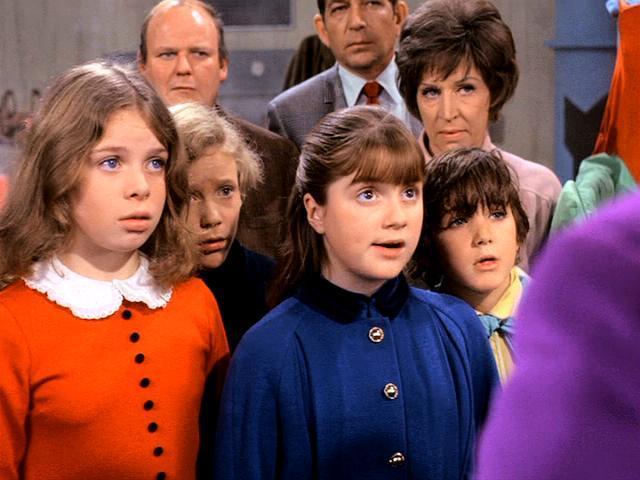
My Favorite Film as a Child: Willy Wonka and the Chocolate Factory

I wanted to be Charlie Bucket: to win a golden ticket and show the world that nice guys could finish first. It didn’t always feel like that in the real world, but on screen it told me another story. Meanness, entitlement and cruelty had their own reward. 

Roll away blueberry, roll away. 


(I stole that last sentence structure from a post by Bondo.)