Saturday, April 15, 2017

The Clouds of Sils Maria

"A thin line separates love from hate, success from failure, life from death, a line as difficult to walk as a razor’s edge." -- W. Somerset Maugham.

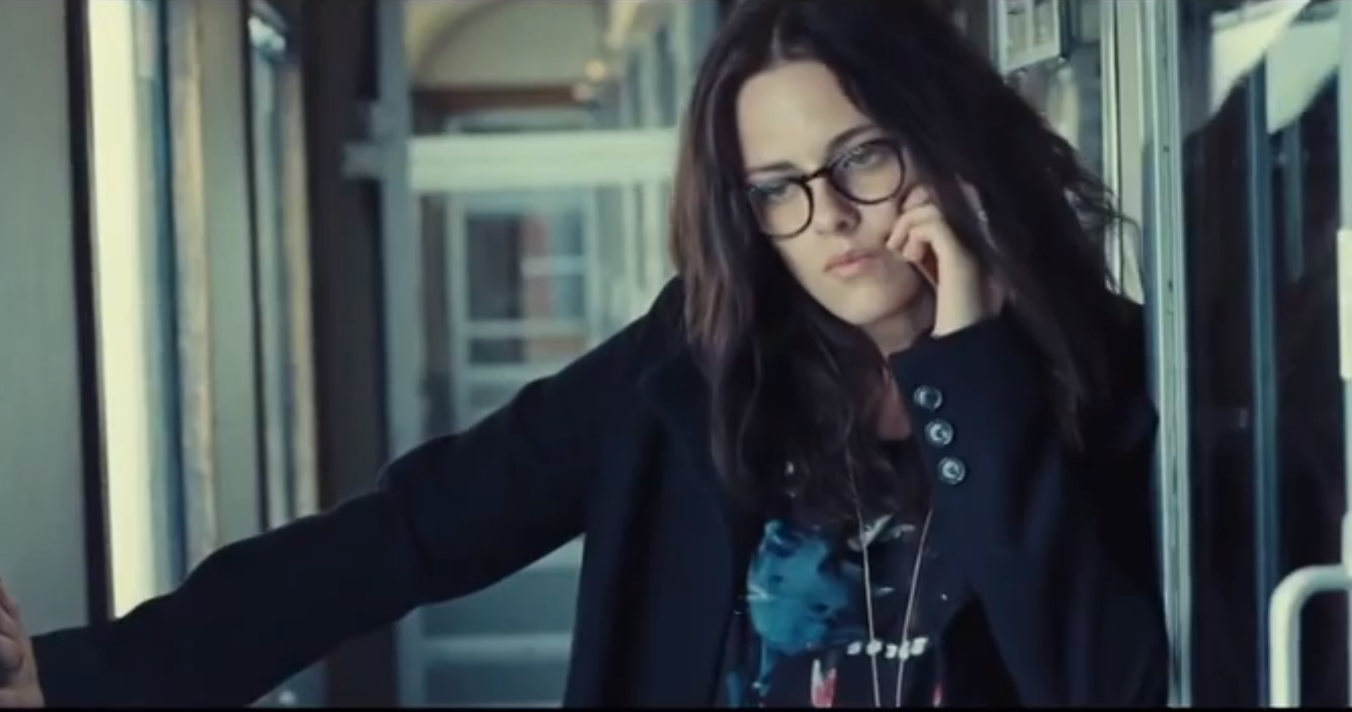
I'd also add, reality from illusion. What are the stories we tell ourselves? How much of what we believe is real and how much is based on molding our thoughts and feelings to a scenario of our own making? As the characters traverse the mountainside, they're traversing this thin line by throwing out ideas, holding onto some and rejecting others, because they either don't fit, or they hit too close to home.

Both of these journeys take maps; one is a chart of the region and the other is a script, full of the past and present blending together, creating a fertile field of self reflection. I like maps. I want a map of sorts, to sort out what is going on in this movie. I'm going to take Valentine's arm as my map. There are three dominant tattoos and they may have some insights into the story.

The eye from the painting Guernica: Some say the eye represents the sun, others, interrogation. Picasso himself said it wasn't up to the artist to define the symbols, but for the public to use their own understanding. So if I were to try and look at it through Valentine, I might see it as representing her as the observer, seeing all and interpreting what is paraded before her. Maria dismissed her impressions as too simplistic, but sometimes greater truths are very simple and unfortunately for Maria, biting.

Three fishes from a David Foster speech: "There are these two young fish swimming along, and they happen to meet an older fish swimming the other way, who nods at them and says, 'Morning, boys, how's the water?' And the two young fish swim on for a bit, and then eventually one of them looks over at the other and goes, 'What the hell is water?'" Foster goes on to say, "The immediate point of the fish story is that the most obvious, ubiquitous, important realities are often the ones that are the hardest to see and talk about." He continues on explaining, how often what we think is certain, turns out to be completely wrong. I know this is the case, more often than I'm comfortable with. Yentl had it right. "The more I learn, the more I realize the less I know." As the personal assistant, Valentine is constantly having to negotiate the "waters" and accommodate Maria's viewpoint. For a long time, she is willing to be told she's wrong and is open to learning. Maybe too long. Her ability to consider other truths and her desire to be with Maria, keeps her in a less than ideal relationship and it takes its toll.


A smile at the foot of a ladder: This is also a title to a fable written by Henry Miller, who's aim was to write truth, the way he sees it. About the main character he said, "[he is] unique in that he came from the blue. But what is this blue which surrounds and envelopes us if not reality itself? . . . We have only to open our eyes and hearts, to become one with that which is." I like to think of Valentine hiking, while working through all that she has gone through with Maria and coming to the realization that her own instincts are right and should be honored." That blue sky and the clear air awakens her to what she must do.

Monday, December 5, 2016

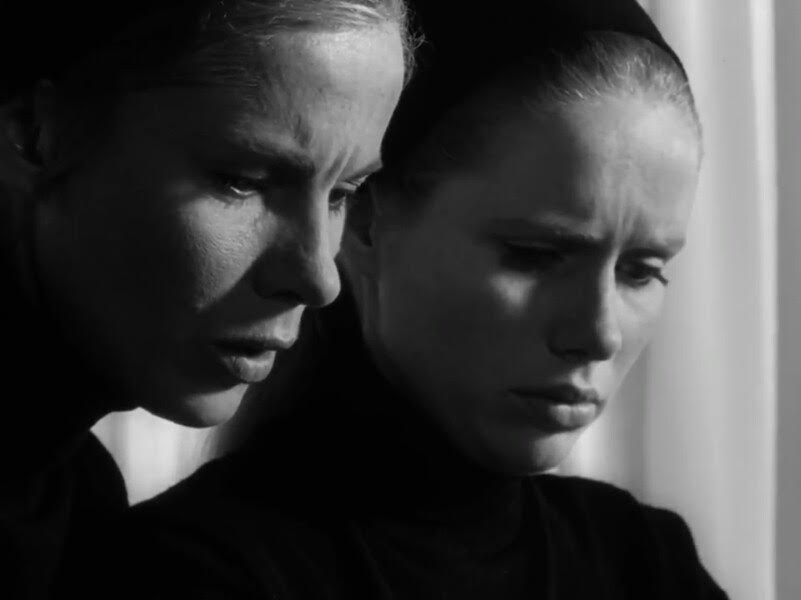
Persona

Alma pours herself into Elizabet with words, which frees up space to draw in Elizabet's demeanor, reputation and all that Alma can only speculate on, but at what cost? 

Elizabet receives Alma in, as a study, but slowly, imperceptibly Alma's living seeps into places that have been shut down and Elizabet is forced to face all that's been locked away. 

The melding of lives both pollutes and purifies, but isn't that both the price and the prize of "not seeming, but being?"

Saturday, December 3, 2016

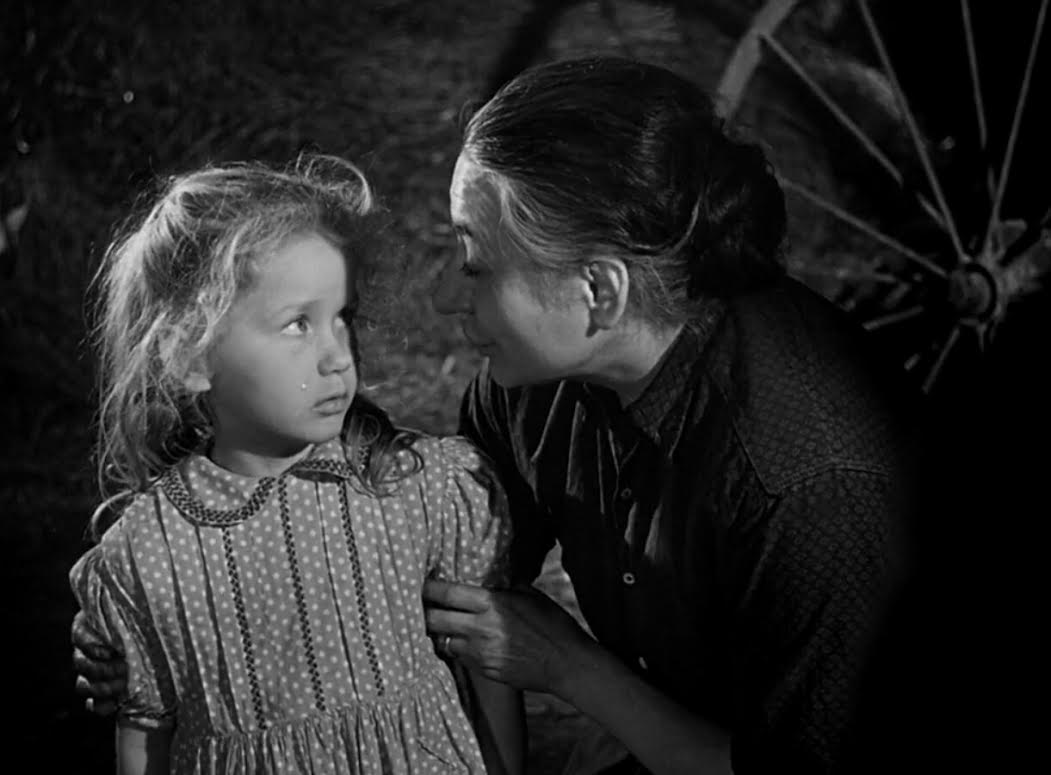
Forbidden Games

That face.

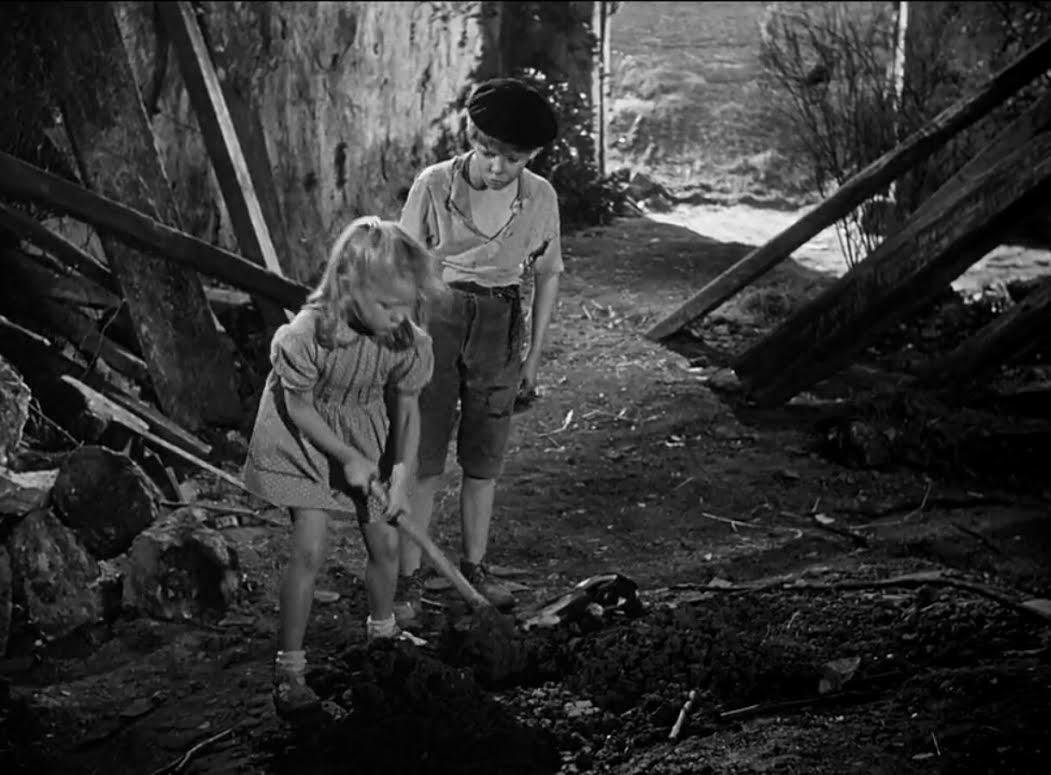
This is acting before being told what acting is. Brigitte Fossey's innocence is so real that everyone around her stops pretending and starts responding to this little girl's wonderment and are as much in awe of her as the audience. That goes doubly for her rescuer, Michel. She wants a fairyland pet resting place? So be it. Her wish is his command, because she only knows sincerity and Michel is acutely aware of it. Nothing will stop him from protecting and preserving what innocence he can. Protecting innocence. That is a tall order, but how can we turn our backs on it? The ways this movie begins and ends are so difficult, that I know it's affecting me and will continue to do so--just the way the director, René Clément, would have it.


The idea of exploring morbidity, in the face of it, sounds like the best kind of therapy possible. I remember an old, beautiful cemetery that my friend and I would visit on the way home from grade school. We'd read the headstones and think about the people's lives, as we cleared away the overgrown plants and grass. Little did I know I was creating my own therapy. My favorite moment in the film is the panning shot of Paulette and Michel's healing creation.

Wednesday, November 30, 2016

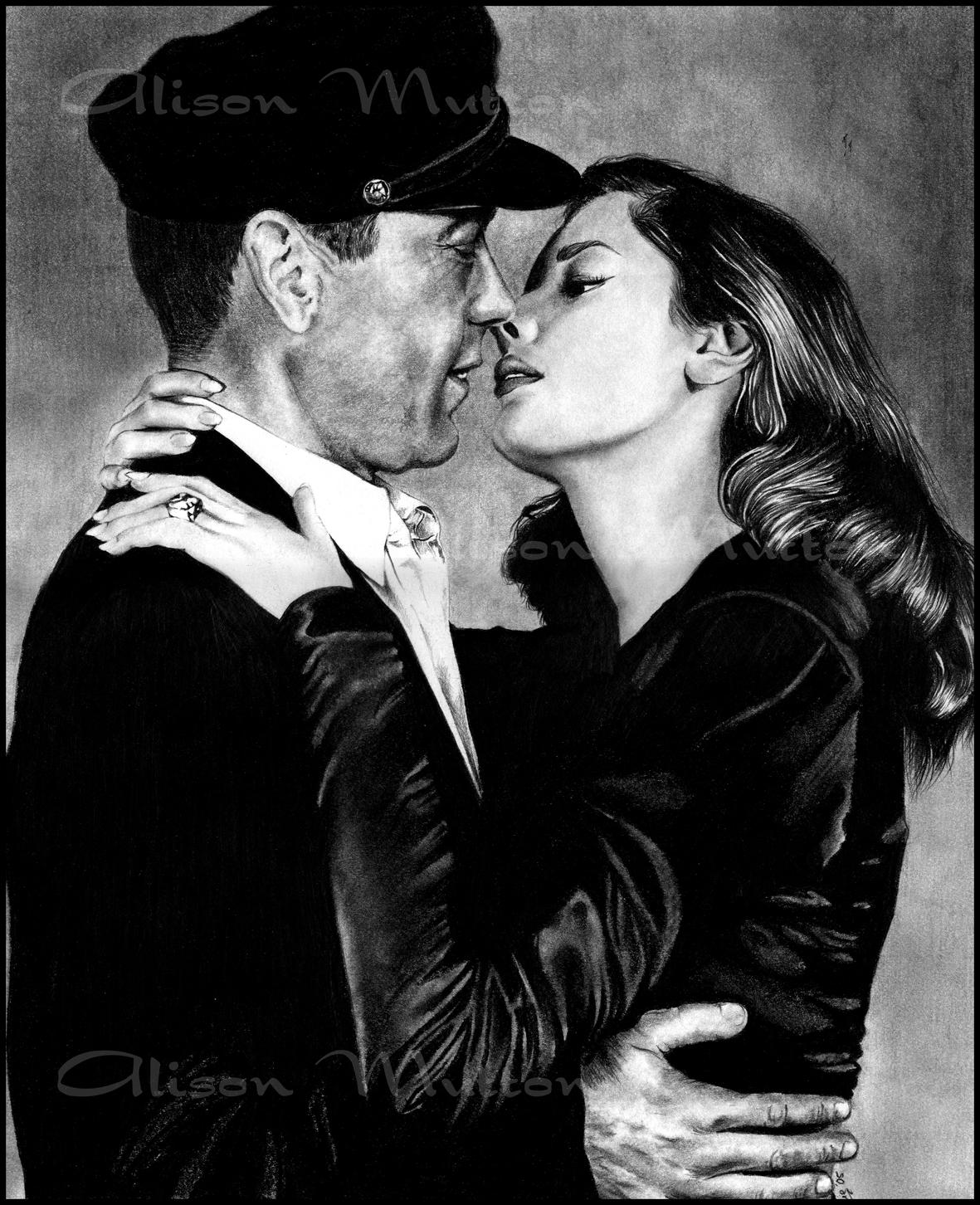
To Have and to Have Not

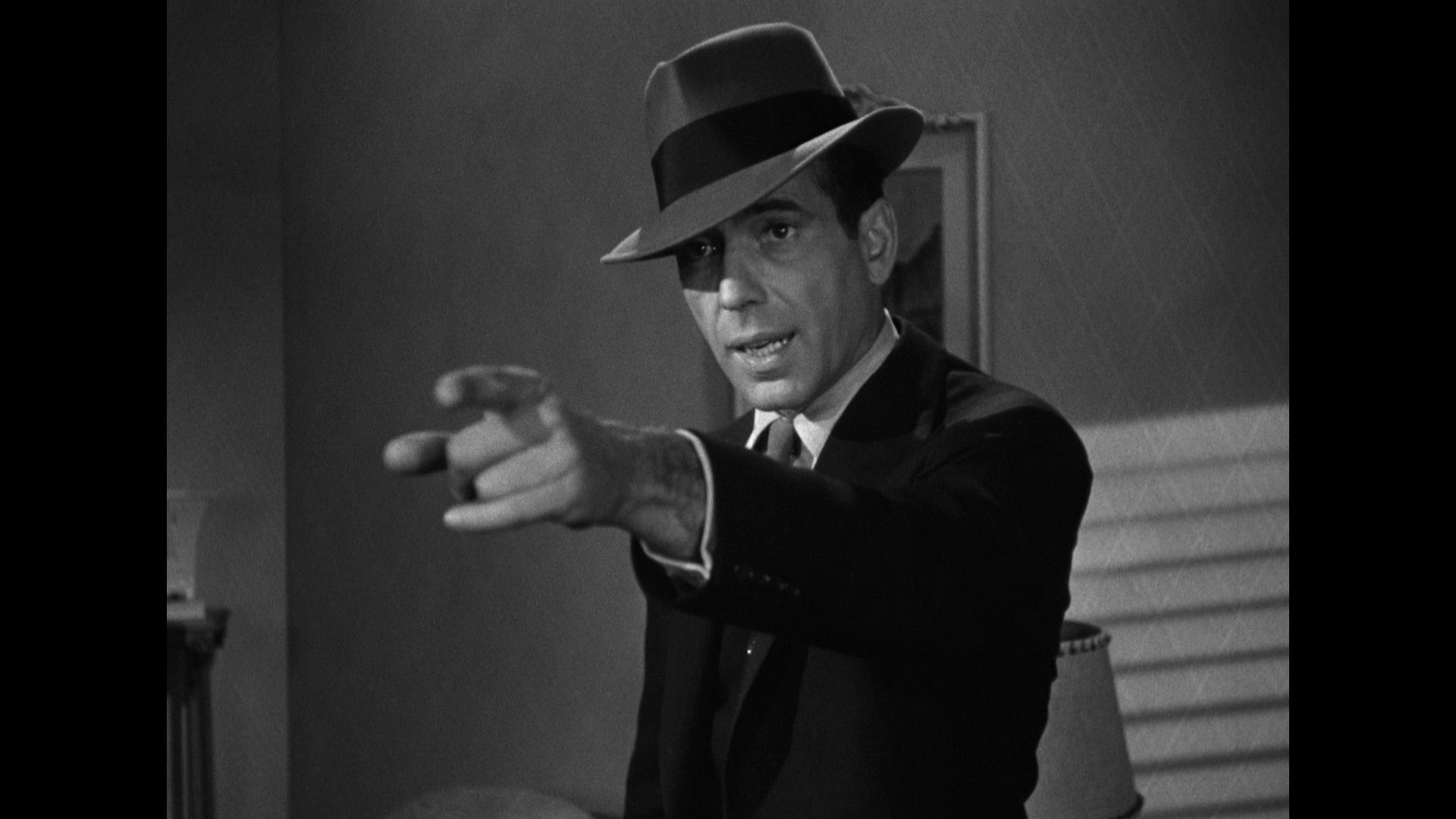
It passes the venetian blinds test, as well as the corrupt system one, but this movie is just too darn hot (and hopeful) to be a noir. The morality level is teetering on flag waiving, sans an impromptu La Marseillaise sing along and even though Bogart's Harry doesn't get to the point of sticking his neck out for the cause, he will to help a beautiful girl. And boy, are they steamy together. The undercurrents and the no-one's-fooling-anyone secret smiles are all there on display. I'm almost too shy to watch, because this first blush of romance shouldn't have to be shared with me.


So instead of two people who's avarice brings about their downfall, this bypasses noir, as together, the heat melts their hard shells and they become putty in each others hands. I'm not going to re-write that! 

My favorite line is when he kisses her back and she says, "It's even better when you help." :D  Who can I give credit to for that? 

Hemingway? 

Faulkner? 

Furthman? 

Whoever you are, bravo!

The Maltese Falcon

Wordy, wordy, wordy! A feast of words, where every one of them is hearty and satisfying.  There are no fillers here. Because I'm watching this alone, I indulge in going back to the buffet time and time again. As each scene ends, I start it over with plate in hand. 

Who knew what first? What clue divulged new information? Where did the double cross or triple cross begin in the discussion? How does Sam Spade stay ahead of everyone, when he has so little to go on? Why is he so doggone smarter than I am? So many scenes have their own Freytag pyramid in them--a little exposition, rising action, inciting moment (and sometimes more than one!), climax and then the fall. This is a film to study, for it panders to no one and demands a viewer to be on his toes.
 

Besides structure, something else worth studying is the complexities and dualities of the characters and I give equal credit to the writing and to the acting. I cannot, for the life of me, know for sure where people stand and part of that is, at times, neither do they. Now that's satisfying.

Sunday, October 23, 2016

Twelveth Night (1996)

There’s something I love about British films, in particular costume dramas, and it has to do with the pool of fine actors who get stirred around and put into seemingly endless combinations—a loose repertory if you will. The fun is to see who gets chosen and how they interact in that configuration. 

This time around there is an abundance of greatness—Helena Bonham Carter, Richard E. Grant, Ben Kingsley, Imelda Staunton, Toby Stevens and the list goes on. Two standouts (if that’s possible) are Imogen Stubbs and Nigel Hawthorne. Imogen’s Viola is so conflicted, that I keep rewinding to watch her play out her scenes again. I wasn’t as enamored with her in Sense and Sensibility, but will watch it again to see if it's her or her annoying character. Nigel Hawthorne pulls off the impossible. 

Is there a more difficult role than Malvolio? Nigel carries him from euphoria to really dark despair—as memorable a character as in The Madness of King George.  I can’t wait to see what blend of talent I’ll get next.

Wild Strawberries

Not what I expected. For some reason I thought this was going to be a type of A Christmas Carol, exploring the redemption of a cold, heartless man. 

But this was no Phantom Carriage Victor Sjöström.  His Dr. Isak Borg wasn't cruel or vindictive, nor was he without feeling, but a man without the faculties or inclination to explore them. He wasn’t even completely isolated as his housekeeper fulfilled his need for interaction--two quietly contented individuals. I didn't feel the cold from him, but instead a pale warmth that needed memories and exchanges to spark the embers and stoke the heat of living--stirring up the pain and the joy. 

I disagreed with Marianne, and I think she came to the same realization as I did by the end. She was wrong about Dr. Borg's mother as well. Beneath the well worn pathways of complaints, was an interesting woman who was lonely and had a lifetime of experiences to share if someone would just stay for a while. Even inside Dr. Evald Borg smoldered some heat, mostly from pain, but also for love of Marianne. Truly an affirming film watching experience.