Showing posts with label 1930s. Show all posts

Sunday, October 23, 2016

I was Born, But....

There’s nothing like a movie of this caliber to accordion down the decades so there is no distance between 1932 and this moment. All in the film is recognizable and relevant. The children and parents feel as real as if I’m watching home movies from a beautiful Criterion camera. The quality is stunning and when I get to a brief moment of less than pristine viewing, I sort of wonder if they left a remnant in just to show what a feat of preservation it was.

I Was Born, But… is an avenue for reflection. I remember the first time one of my children didn’t think I was cool anymore, and then the next, and the next... It’s a wave of regret and despair and then recognition that I wasn’t ever really cool to begin with and it isn’t necessarily my job anyway. After their disappointment, they find I’m other things and we move forward. Contemplating comes easily while watching Chichi Yoshi navigate his way through the occupation of being a father as well as an employee.

I give the championship synchronized temper tantrum of Keiji and Ryoichi a 9.5 out of 10. Well done boys. They’re in-tandem movements throughout the film fascinate and delight me as well.


Sunday, September 25, 2016

Gone with the Wind

The second half spends very little time on the war, because the story is ready to move onto the Reconstruction era and the continuing soap opera that is Scarlet's life. She would have it no other way, so the rest of the characters and the audience endure her pouts and schemes as she orchestrates her whims to a fevered pitch. As much as I loath her character, there is something to say for tenacity. 

Just think what she could have accomplished with a conscience.


As for the war and wanting to understand this time period better, I believe there is much to glean from GwtW, even with its soft sell of the South. Brotherhood and honor abound and war may start out with grand ideals on each side, but in the end, the broken, defeated men lament what it was all about. 

What again were they fighting for? Oh yeah, Tara. dirt.

Wednesday, April 27, 2016

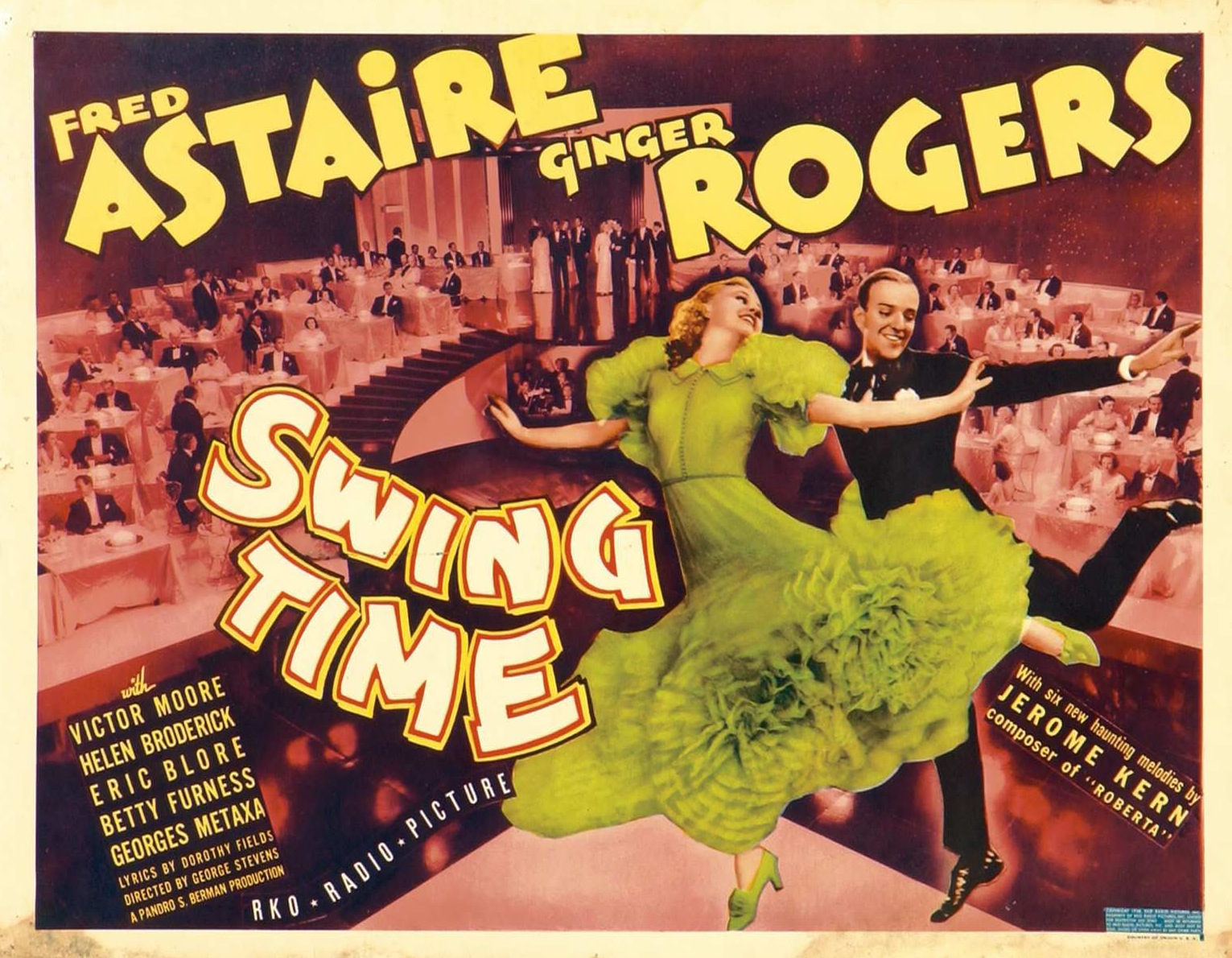
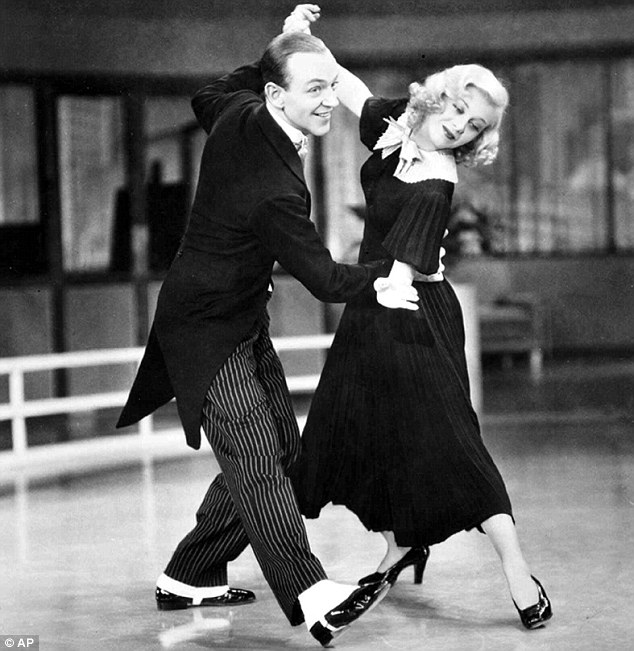
Top Hat v. Swing Time

Ladies and Gentlemen, the main event this evening is the bout between two champions of the silver screen and the winner will be rewarded a position in my top 100.


In this corner we have Top Hat, an Academy Award best picture nominee for 1935, #15 in the AFI’s list of best musicals, and supported by corner man Irving Berlin.        


And in this corner we have Swing Time, conceivably an underdog but definitely no Tomato Can. Having an Academy Award win for best song “The Way You Look Tonight” and the capable second of Jerome Kern and Dorothy Fields, makes this 1936 film a serious contender.


Pound for pound they will be judged in seven rounds of grueling competition. With the skill level of these greats, it is sure to go to the scorecards for a final decision.

Round 1
The screwball comedy premise: masking attraction with an antagonistic front. Fred and Ginger’s variation on the theme: Astaire’s actions propel him to fall in love and for Ginger to fall in hate.

TH: Fred’s nocturnal tap dancing wakes Ginger and she confronts his inconsiderate behavior. Then she mistakenly thinks he’s her friend’s husband.

ST: Ginger thinks Fred has stolen a quarter from her purse and in trying to make things right, Fred accidentally gets her fired from her job as a dance instructor.

Both serviceable show launchers, but this round goes to Top Hat. The tap dance scene is funny and endearing. The familiar mistaken identity device gets a little long in the tooth, but it sets up some good comedy and the sweet conflict for the “Cheek to Cheek” dance. In Swing Time, Fred’s actions make for a superb challenge dance (see round 2), but he needs to continue to make other blunders to keep Ginger sufficiently angry.


Round 2
The Challenge Dance: advance, retreat, conflict makes way for cooperation.

TH: Fred and Ginger get caught in a storm and seek refuge in a pavilion. He persuades her with a complex dance to call a truce.                                                                                                                 
ST: Fred wants to help Ginger get her job back so shows the boss how well he can dance because of her instruction.


Swing Time wins this one. “Isn’t this a Lovely Day to be Caught in the Rain” may have better examples of dance steps that illustrate the conflict/cooperation, but “Pick Yourself Up” is technically intricate and humorously emerges right from the plot. 


Round 3
Supporting Cast: Helen Broderick and Eric Blore

Top Hat best utilizes these two actors. Helen delivers some great dead pan lines that raised the show’s comedy level up much higher. Eric isn’t laugh out loud funny, but does some interesting physical humor and gets to articulately insult a police officer. I don't find either one of them is particularly funny in Swing Time and think their talents are a bit squandered.


Round 4
Fred Astaire Specialty Song and Dance

This might not be a popular verdict. The iconic “Top Hat, White Tie and Tails” should be the winner of this round but I’m going to go with “Bojangles of Harlem” in Swing Time.
My belief is that Fred’s was paying a loving tribute to Bill Robinson, who had been an influence on his dancing. The black face is jarring, but with the filter of what I think was the intent, it allows me to watch and enjoy the prowess and innovation.


Round 5
Best Bittersweet Romantic Dance

I’m going to get in trouble with this one too. “Cheek to Cheek” is a flight of fancy. Ginger is swept away and doesn’t come back to reality until after the notes fade away. The dips and lifts are beautiful. But, I’m going for bittersweet as the emphasis. “Never Gonna Dance” is charged with emotion and despair. The dancing is breathtaking and the undercurrents remind me that Fred and Ginger are not just great dancers, but believable actors as well. Swing Time wins this round.


Round 6
Best Dress

Oh
those controversial feathers wafting in the air and onto the dance floor. Ginger designed the dress for the "Cheek to Cheek" dance in Top Hat and with her mother stood up to Fred’s disapproval. Good for them and good for us. I watch the dance carefully to see if I can find any trace of Fred’s disgust, but I can’t. Now that’s a professional.


Round 7
Best Song

“Cheek to Cheek” is top tier, but I give this round to “The Way You Look Tonight” from Swing Time. It’s played over part of “Never Gonna Dance” and makes me want to cry, it’s so beautiful.


Fouls: -½ point each

Swing Time
Forced Hilarity (band leader's pants) This is going to be an issue as well when I get to A Star is Born.
Convertible in the winter (All for a windshield wiper/snow gag)
Georges Metaxa (the band leader who can't sing or act)


Well folks, It’s been a barnburner, but Top Hat has been decided the winner by a mere ½ point. It looks like my top 100 needs some adjustments to accommodate both of these fine films.


Sunday, April 17, 2016

42nd Street

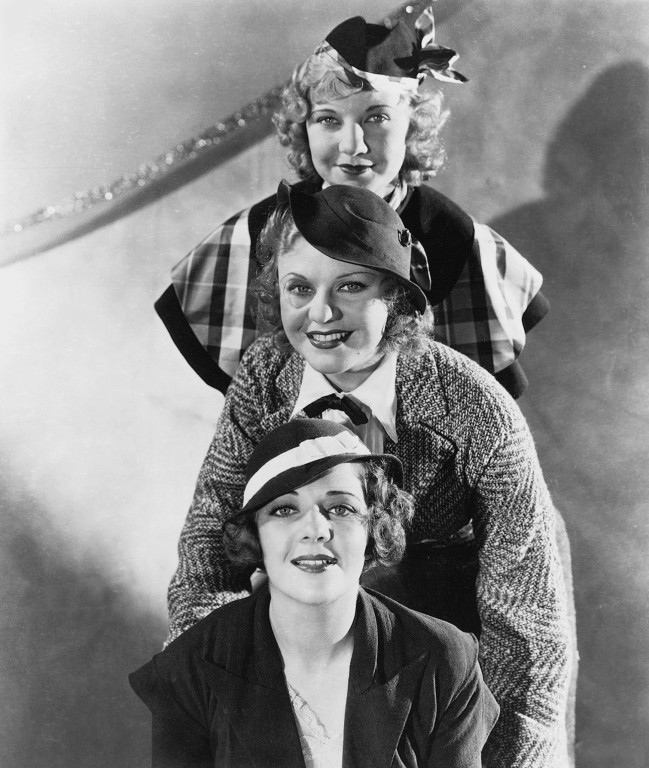
42nd Street doesn’t look like a film that came out a few years after the introduction of sound. The influence of more than a decade of backstage musicals on Broadway carried over to help this and other films hit the boards running. Add to that the genius of the transplanted Busby Berkeley. The proscenium arch gets blown apart as the audience watches, voyeuristically, what goes on behind the scenes. The popularity of this musical subgenre can be likened to dish-the-dirt tabloids.

Stereotypes abound where not much is needed to establish a character: the ingĂ©nue, Any Time Annie, the over worked director, the world weary leading lady and the sugar daddy. What’s nice about this is that the film doesn’t get bogged down, but hums along at a brisk pace. The concept could get old, but not here. This is brand new. Let the musicals that come after deal with changing things up. I enjoyed every minute of this movie that up until now had only been seen in bits and pieces. 


Best surprise; Ruby Keeler is adorable. No wonder she was so popular.


Sunday, December 27, 2015

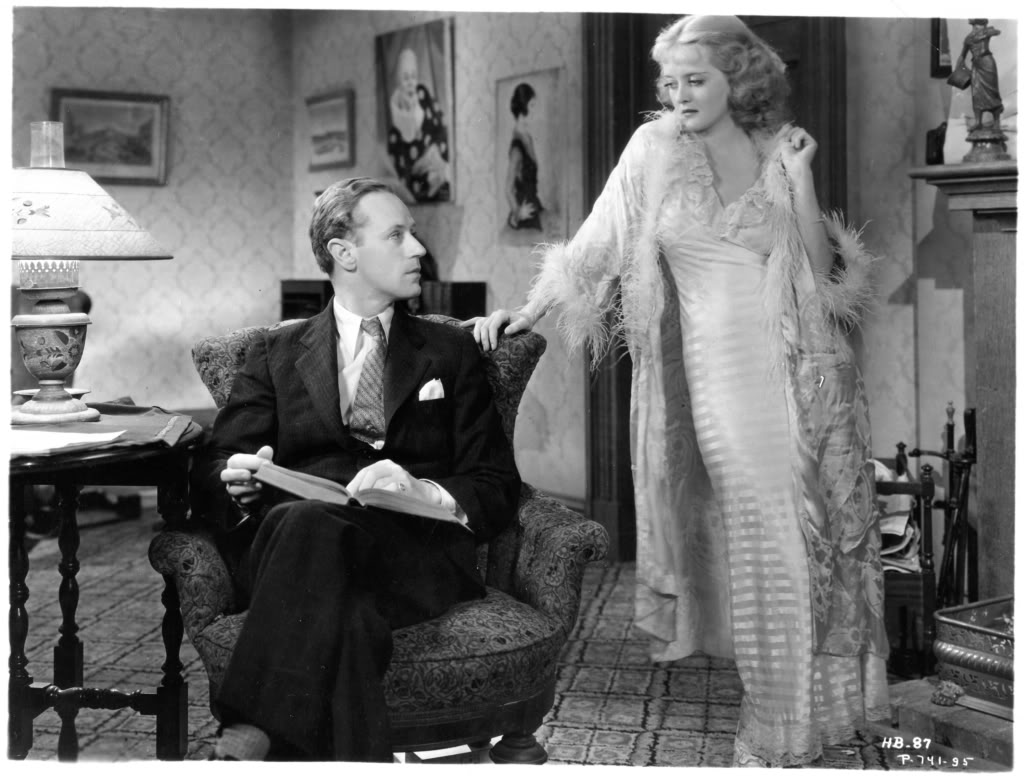
Of Human Bondage

Leslie Howard is Ashley Wilkes in my, branded as a child, mind. This movie, where he plays Philip Carey, could have very well solidified his getting that part. With his doe eyed stare that says, “walk all over me, I beg of you.” What a tortured beautiful man that I just want to rescue.

I’m not sure about the accent, but I can’t help enjoying everything I see Bette Davis do (except for Return to Witch Mountain). She is so raw and at one point has an all out tizzy fit, which left me slack jawed. 


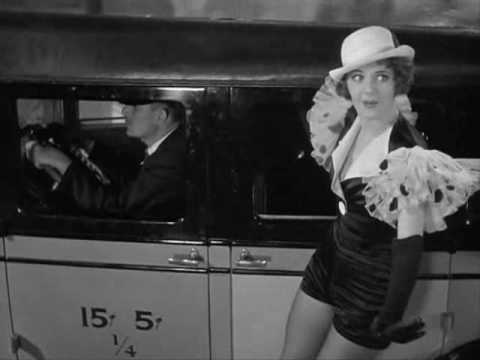
There was a small detail that illustrated the turning point in the film that I really liked and I’ll call it: The rise and fall of Mildred’s polka dotted dress. As Mildred is having a triumphant moment, her dress, a gift from Philip, fits like a glove with ruffles for added flaunting, then at the beginning of the descent her dress has lost the ruffles, lost the bust support and the tag pokes up in back. And, as an accessory, Mildred wears a heavy spiky chain around her neck. 

I love stuff like that and I love this movie.


Monday, November 23, 2015

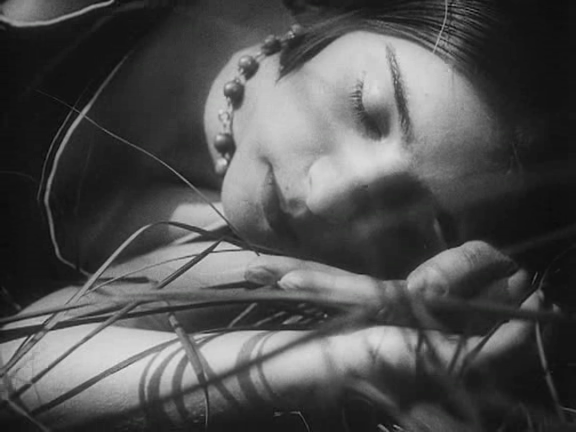
People on Sunday

1930, Germany. People on Sunday mindlessly sleep, drink, flirt, and eat. 

I want to yell at the screen. “Wake up! Wipe that silly grin off your face Edwin.” If only I could rip the watch off my arm and shove it in his face. “Don’t you know what time it is? It’s Nazi time! You’re oblivious to what is going on under your nose.” The little boy who got his picture taken at the park, in nine years, will be at the River Plate on the Graf Spee. The world as they know it will end. But they can’t hear me, so drink up; lounge by the lake, sleep the day away.

I can’t blame them really. They just came off of a great inflation upheaval where they learned to spend their money as soon as they earned it; in case it wasn’t worth much later. They were conditioned to live in the moment because of the unsure future. With all the political turmoil, escapism must have looked pretty good.


Wednesday, October 7, 2015

Films by My Most and Least Favorite Directors

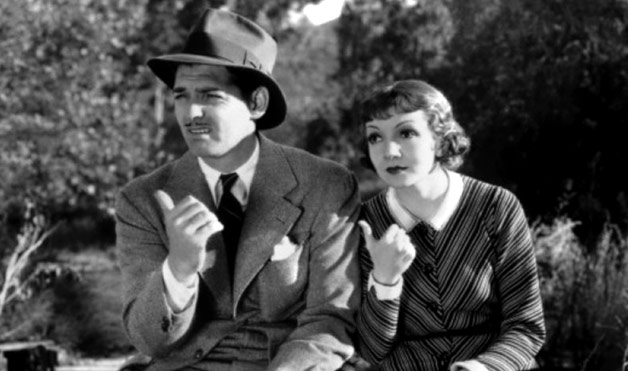
The Best: Frank Capra-It Happened One Night


Ahh, sweet Capra-corn. 

I eat this stuff up. The goodness of humanity, the rewards of hard work and the blessings of selflessness are all themes that resonate with me. 


It Happened One Night combines them and adds in clever dialogue and real emotional weight. I care about the characters here as well as in his other films. Even thought I know how each story will probably end, somehow I'm still eager to find out. 

Truly this day's challenge of choosing a single director was impossible, so I went with the director that makes me consistently happy.


* * *


The Worst: Ed Wood- Plan 9 From Outer Space

Flying Saucers made from plates, wobbling tombstones, pillows seen for falling stunts, cue card reading priests, it's day-no it's night- no it's day, X’s marked on the floor for scene blocking—have some respect for the craft, man!

Because it is beyond bad, it does make for a fun movie night.

Tuesday, September 1, 2015

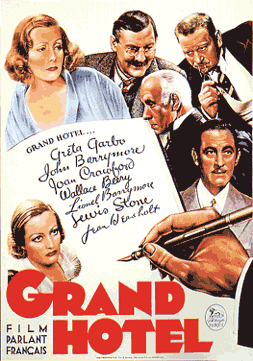
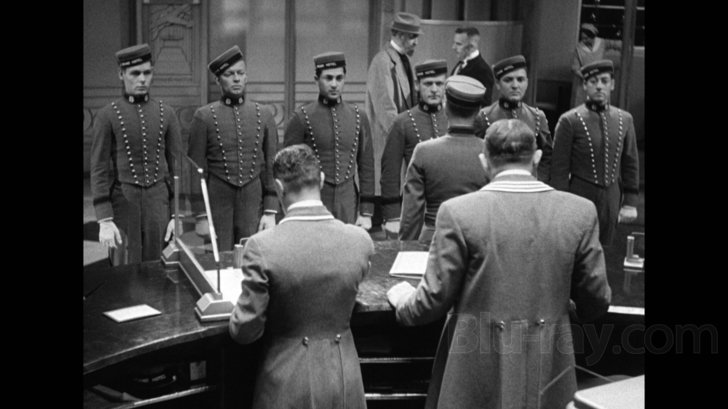
Grand Hotel

Grand Hotel: where the action behind the camera is as equally entertaining as the movie itself.

Just as the disparate characters are linked by their stay at the hotel, so too are the actors tied to the production—a meta portmanteau. Bloated egos drive bad behavior as the stars jockey for position, each having their own story to tell. Joan Crawford, the better actor, can’t get Greta Garbo to acknowledge her as they pass each other in the halls. Hence, Crawford finds satisfaction in playing records of Marlene Dietrich, knowing full well that Garbo intensely dislikes the woman. With the threat of Crawford running away with the picture, Garbo later films more scenes to get equal time.


As for the film, Greta Garbo portrays an unstable waning ballet dancer. I come to the realization that maybe the instability isn’t just an act. She is strange and a little frightening. To add to that, her close ups are lit from above so that her celebrated lengthy eyelashes cast shadows upon her cheeks.

John Barrymore, with his theatrical background, keeps himself in check and performs fairly understatedly--until his scenes with Greta, where he throws caution to the wind. Their mutual affection for each other spills onto the celluloid and I sit back and say, “Well, would you look at that!”


My biggest delight comes from the man who plays Otto Kringelein.  All my life, Lionel Barrymore was Mr. Potter. It was how I was introduced to him and how every Christmas I would meet him again. During the movie I keep wondering, “How can this be Mr. Potter?” The actor completely immerses himself into the awkward, humble, little pencil pusher. He’s the kind of man George Bailey would have championed.  Mr. Barrymore, I am now anxious to study you further.